
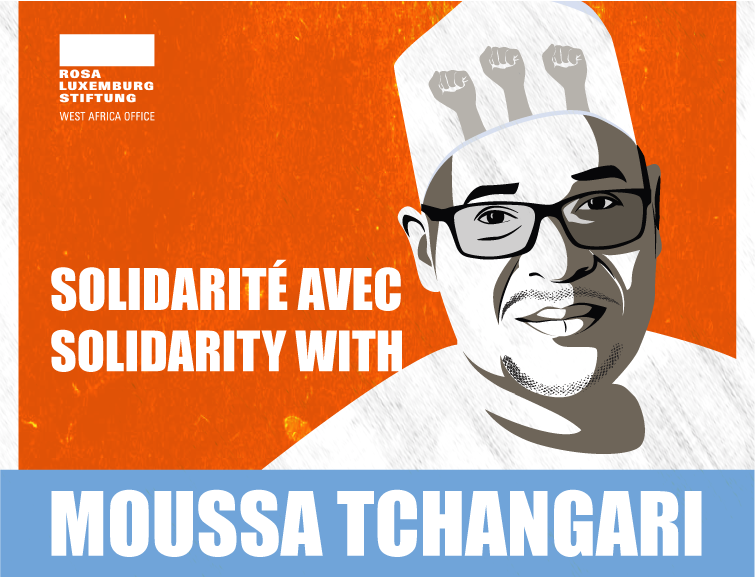
Moussa Tchangari is a journalist, political analyst and Secretary-General of Alternative Espaces Citoyens, a Nigerien organisation working on democracy, human rights and social justice. For decades, he has contributed to political debate in Niger and the wider Sahel, bringing a critical perspective to questions of power, inequality, security and the rights of citizens.
His engagement in public life goes back to the 1980s. Over the years, he has worked through civil society, journalism and political education, advocating for democratic participation and social justice and supporting those whose rights are under threat. His analyses have also made him an important voice in discussions about the political and social transformations taking place across the Sahel.
On 3 December 2024, Moussa Tchangari was arrested in Niamey. He has remained in detention since then. The Nigerien authorities have brought serious charges against him, including allegations of involvement with a terrorist enterprise, undermining national defence and intelligence activities on behalf of foreign forces. If convicted, he could face the death penalty.
Tchangari’s detention comes at a time when space for critical voices and public debate in Niger has become increasingly restricted. Whatever the political circumstances, the right to express political views, to organise and to participate in public life must be protected!
We express our solidarity with Moussa Tchangari, his family, his colleagues and fellow activists. We remain concerned about his continued detention and call for his immediate release.
Free Moussa Tchangari !
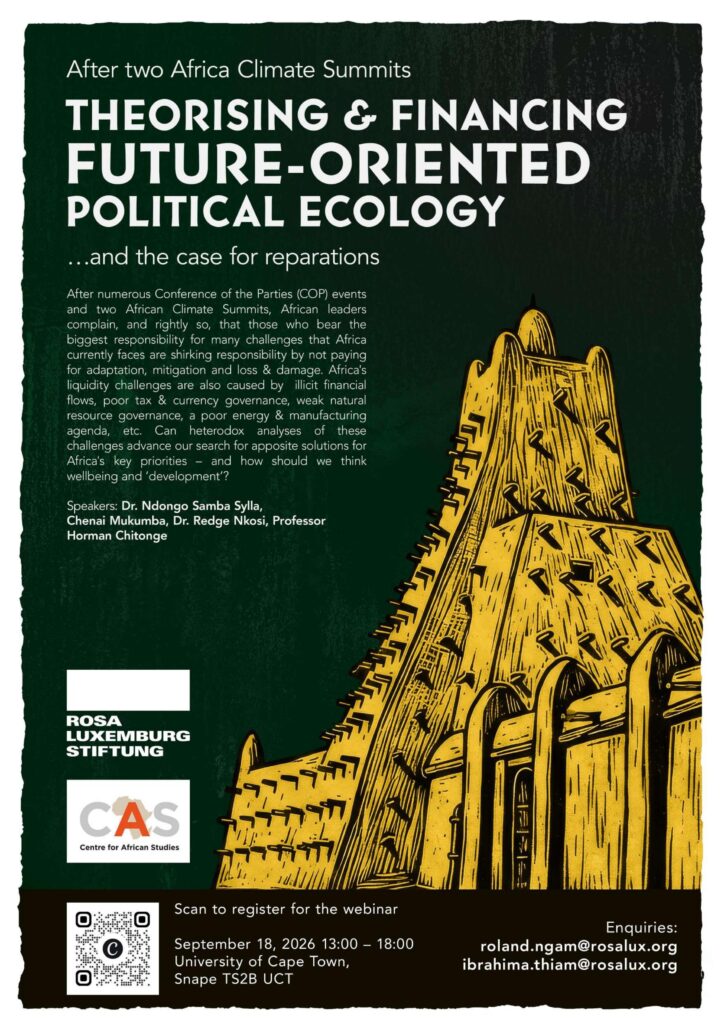
Join us online on September 18, 2026! This online event will provide an opportunity to engage in meaningful discussions and explore perspectives on shared challenges and possibilities together with our speakers, Dr. Ndongo Samba Sylla, Chenai Mukumba, Dr. Redge Nkosi and Professor Horman Chitonge.
📅 Date: September 18, 2026
⏰ Time: 13:00–18:00 GMT+2
💻 Format: Online Webinar
🔗 Registration: Register via the QR code.
#RosaLuxemburgStiftung #RLS #Webinar #Senegal #Africa #Dialogue #SocialJustice #SocialTransformation
Are you interested in applying for one of our Master’s or PhD scholarships in Germany and have questions about the application process?
Join our online information session to learn more about the scholarships and get answers to your questions. The session is an opportunity to clarify questions regarding eligibility requirements, the application process and required documents.
📅 Thursday, 10 September 2026
🕙 10:00 UTC
💻 Online via Zoom
🗣️ Language: English
The session is open to all prospective applicants interested in our Master’s or PhD scholarship programmes.
Please register in advance to participate. After registration, you will receive a confirmation email with the Zoom link.
Registration Link: https://eu01web.zoom.us/meeting/register/pEvNqte5Q1CH65mXwrzLfA
We look forward to meeting you online!
The Rosa Luxemburg Foundation awards PhD scholarships to applicants from West Africa to pursue doctoral studies at a university in Germany.
The RLS is a German institution for political education, a forum for critical thinking and political alternatives, and a research centre for progressive social development. Through its regional office in Dakar, it works with West African civil society organisations, NGOs and universities on the following topics:
• Peace and security
• Economy, labour and social justice
• Climate justice
• Feminism
• Migration
Anyone who has been admitted to a PhD programme at a public or government-recognised university in Germany may apply, regardless of their field of study or the topic of their dissertation. Here you will find information on how to obtain this admission:
Admission to a PhD programme at a German university generally requires an above-average Master degree (or equivalent). The minimum grade required is often 2.5 on the German grading scale. For this purpose, your final grade will be converted to its equivalent on the German grading scale. Before you can apply, you must find a university professor who is willing to supervise your doctoral project as your supervisor. You must identify a potential supervisor yourself and submit a research proposal (exposé) to her/him. If you do not yet have the necessary contacts at a German university, we recommend asking the academic staff at your own university for relevant contacts. These may have been established through academic collaboration or participation in conferences. The German Academic Exchange Service (DAAD) can also provide assistance. It is represented at some universities in West Africa either through an office or a lecturer and is usually found in the Department of German Studies.
Guidance on drafting the research proposal and further information on the application process can be found in the applicant’s handbook.
In addition to admission to the doctoral programme, the following are required:
- An excellent academic degree;
- Social commitment to social causes in accordance with the values of the Rosa Luxemburg Foundation;
- As a rule, applicants should provide proof of German language proficiency at B1 level. Alternatively, English language at B1 level or native-speaker proficiency may suffice;
- Applicants should, where possible, acquire or improve their German language skills before leaving their home country. We can fund the relevant courses, e.g. at the Goethe-Institut. This also applies if the dissertation is written in English or French;
- You must reside in Germany for the duration of the funding;
- The maximum funding period is three years;
- Applicants who have already received a scholarship or doctoral funding from another institution may only continue to receive funding from the Rosa Luxemburg Foundation if this previous funding lasted for less than 1.5 years. Any previous funding is counted towards the total duration, meaning it is deducted from the maximum funding period of three years. No scholarships are awarded for the completion of a doctorate;
- Private stays abroad in the applicant’s country of origin or in third countries are not eligible for funding;
- Dual funding with other public funds (e.g. simultaneous receipt of other scholarships from public funds or receipt of unemployment benefit and a scholarship) is excluded; different scholarships are offset against one another.
Applications are accepted exclusively via the application portal. It is open from 20 August until 1 October 2026, 23:59 Central European Summer Time. The documents required for an application are listed here again in German and English :
“Contact: koenig@rosalux.org. However, due to limited staff resources, we probably won’t be able to respond to all inquiries.”
The Rosa Luxemburg Foundation awards Master scholarships to applicants from West Africa to pursue a Master’s programme or equivalent at a university in Germany.
The RLS is a German institution for political education, a forum for critical thinking and political alternatives, and a research centre for progressive social development. Through its regional office in Dakar, it works with West African civil society organisations, NGOs and universities on the following topics:
• Peace and security
• Economy, labour and social justice
• Climate justice
• Feminism
• Migration
Anyone who is enrolled or has been admitted to a Master’s programme or an equivalent at a public or government-recognised university in Germany may apply, regardless of their field of study. You will find information on how to obtain this admission on the Uni-Assist website. For many universities, you must also apply via this portal.
We also recommend asking the lecturers at your university about contacts with German universities. These may have been established through academic collaboration or participation in conferences. The German Academic Exchange Service (DAAD) can also provide assistance. It is represented at some universities in West Africa either through an office or a lecturer and is usually found in the Department of German Studies.
In addition to enrolment or admission to the degree programme, the following are required:
- Proof of a completed Bachelor’s degree or equivalent
- An excellent academic degree
- Social commitment to social causes in accordance with the values of the Rosa Luxemburg Foundation.
- As a rule, applicants should provide proof of German language proficiency at B1 level. Alternatively, English language at B1 level or native-speaker proficiency may suffice. Applicants should, where possible, acquire or improve their German language skills before leaving their home country. We can fund the relevant courses, e.g. at the Goethe-Institut. This also applies if the selected programme does not use German as a teaching language
- You must reside in Germany for the duration of the funding
Applications are accepted exclusively via the application portal. It is open from 20 August until 1 October 2026, 23:59 Central European Summer Time. The documents required for an application are listed here again in German and English :
“Contact: koenig@rosalux.org. However, due to limited staff resources, we probably won’t be able to respond to all inquiries.”
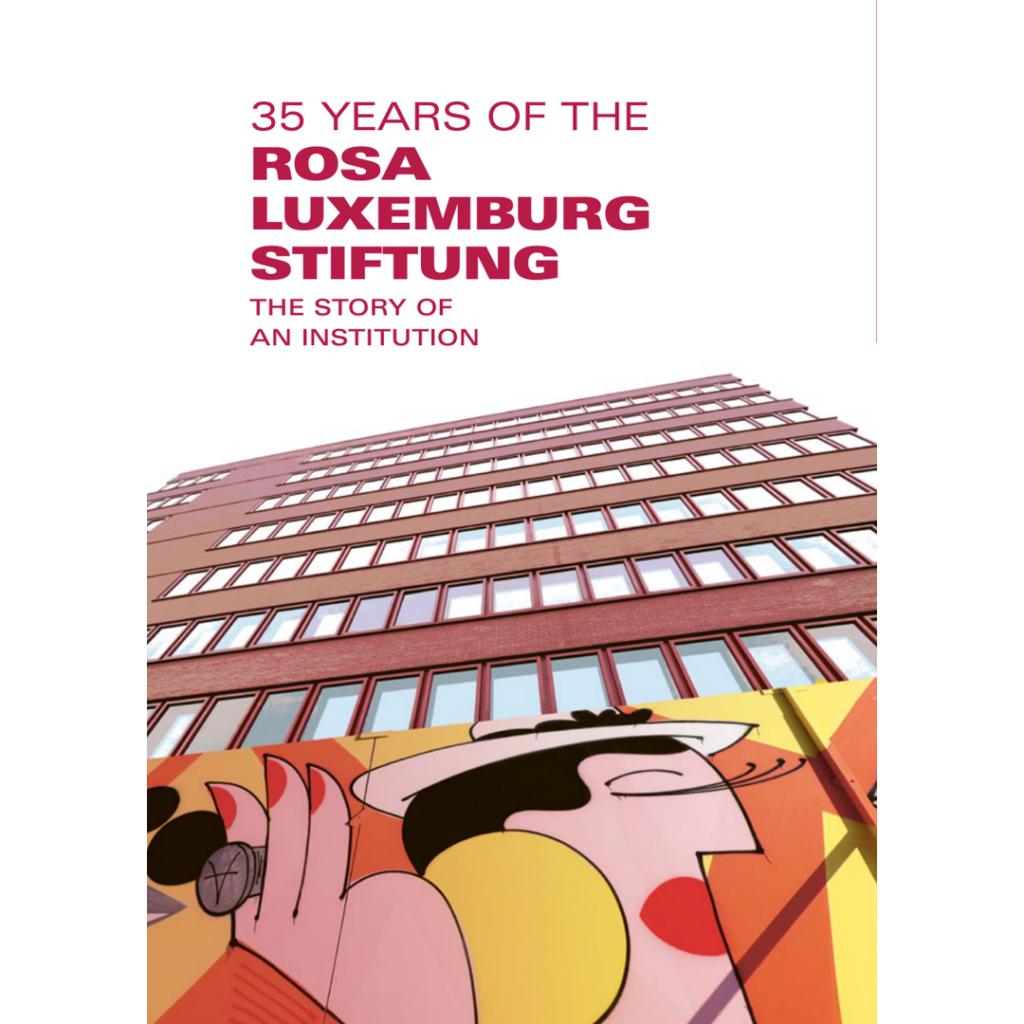
To mark its 35th anniversary, the Rosa-Luxemburg-Stiftung presents a publication reflecting on its history, achievements, and future perspectives. Combining institutional history with personal stories and interviews, the brochure traces the foundation’s development from its beginnings in 1990 to its role today as an internationally connected left-wing think tank. It offers insights into the people, ideas, and networks that have shaped the foundation over the past three and a half decades, while looking ahead to the challenges and opportunities of the years to come.
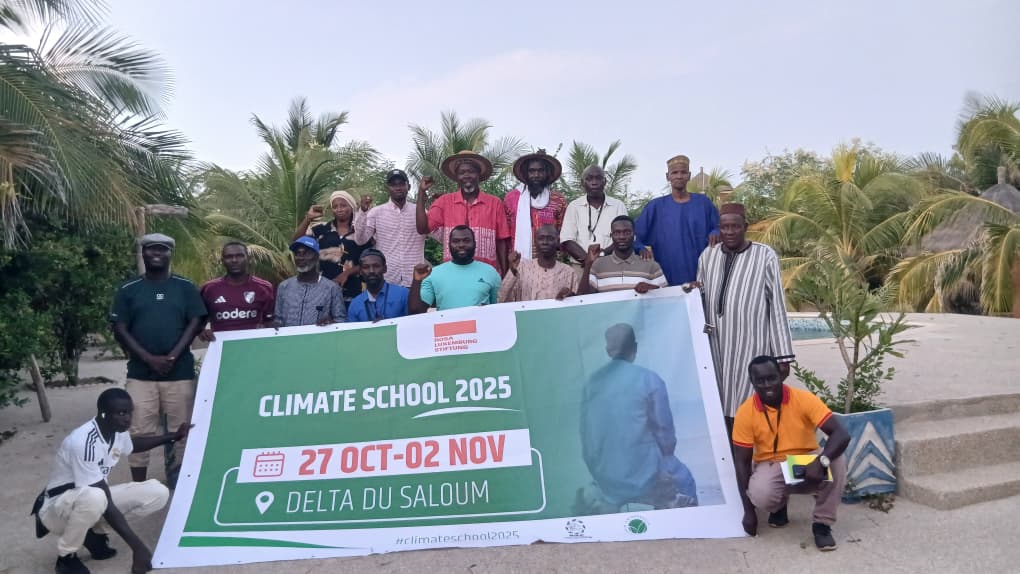
Adopted in Palmarin, October 31, 2025, at the conclusion of the 5th Edition of the Climate School Carried by the Rosa Luxemburg Foundation West Africa, in collaboration with its partners, Écologie Universelle and the National Platform of Actors for Climate Justice (PNAJC).
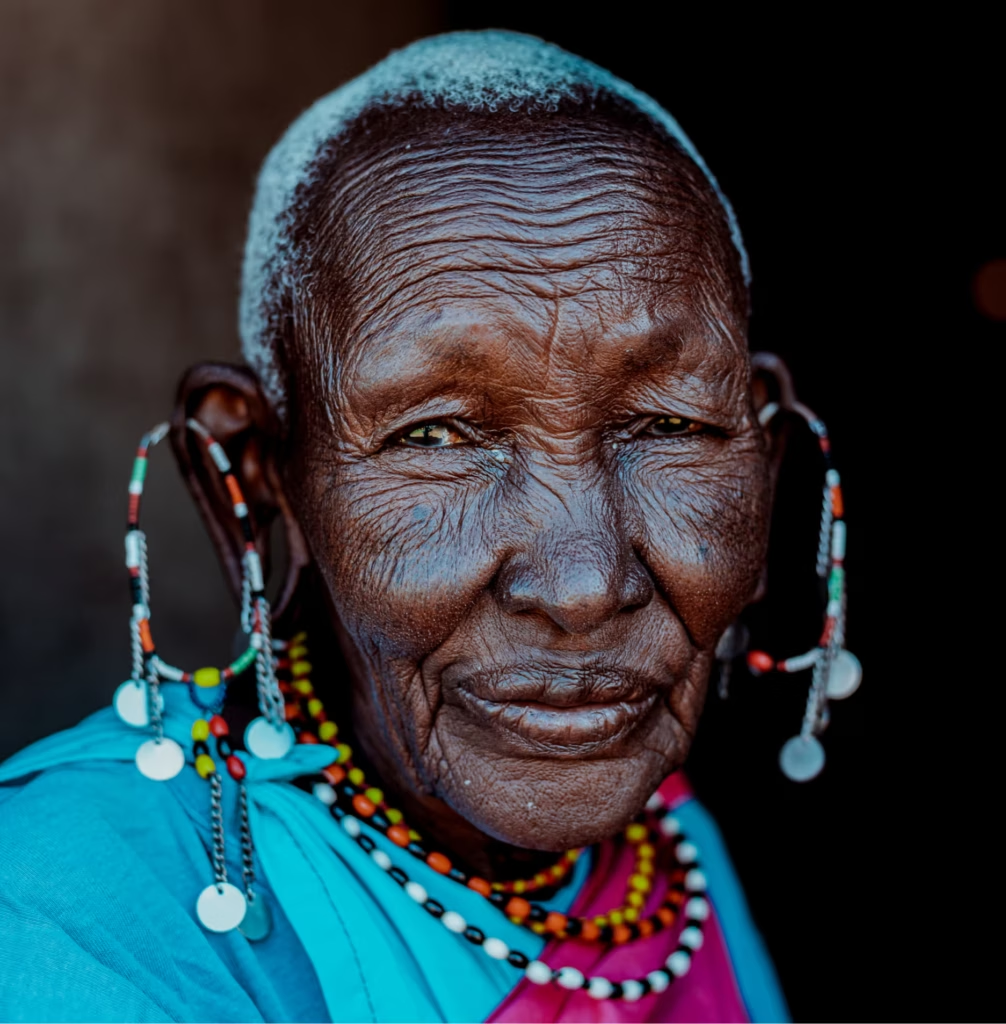
We are pleased to share this new publication by our colleagues at the Rosa-Luxemburg-Stiftung offices in Johannesburg and Dakar.
Denkyema is a photo collection dedicated to African local knowledge systems — a visual exploration of the continent’s rich and diverse ways of knowing and living in relation to the natural world.
Contributors:
Dr. Ibrahima Thiam, Project Manager Climate Justice at RLS Dakar
Dr. Roland Nkwain Ngam, Project Manager Climate Justice at RLS Johannesburg
Explore the full collection at www.denkyema.com